Even if you charge at home most of the time, public chargers matter. They make long trips possible, they're the main option for some drivers without off-street parking, and they're useful backup when plans change. Public charging in Australia has expanded, with governments at all levels funding new fast-charging stations, according to the Green Vehicle Guide. This guide explains how public charging works and how to plan around it.
Type 2
Public AC plug
Bring your own cable
CCS2
DC fast-charging plug
Cable attached
80% <30 min
Fast charging
Becoming more available
AC and DC: the two kinds of public charger
Public chargers come in two broad kinds.
AC chargers (destination charging). These are similar to home wall chargers and are common at shopping centres, hotels, council car parks, workplaces and tourist attractions. Energy.gov.au says Type 2 can provide up to 22 kW, but some EVs only accept 11 kW AC. They suit places where you'll stay a few hours anyway.
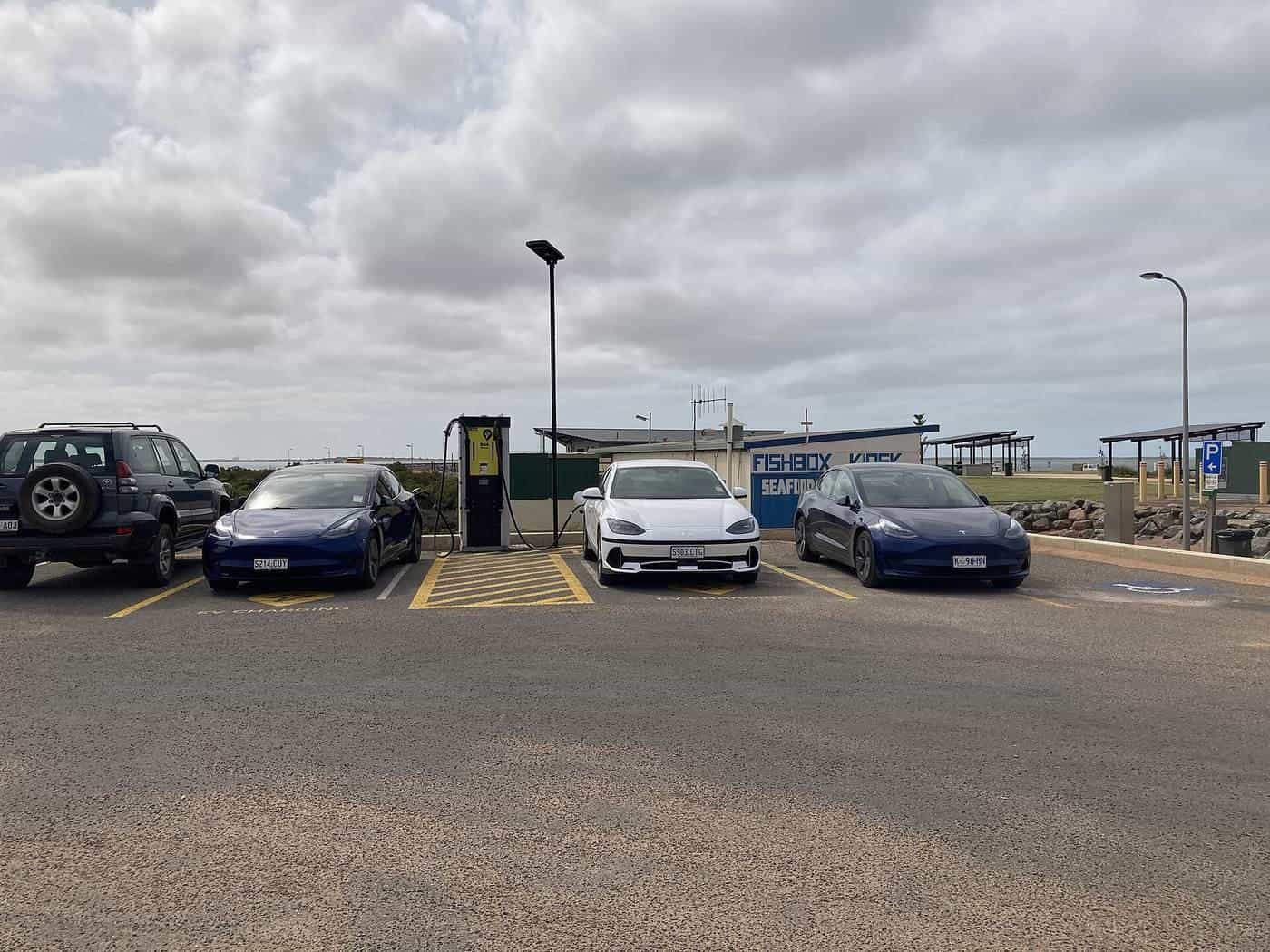
DC fast chargers. These convert power to DC before it reaches the car, bypassing the car's onboard charger, so they can charge much faster. They're typically found along highways, in regional towns and at service centres. Energy.gov.au notes public chargers that can charge a vehicle to 80% in under 30 minutes are becoming more widely available. Actual speed depends on the charger's output, your car's maximum DC rate, the battery's temperature and how full it is.
Plugs and cables
Energy.gov.au sets out the standard connectors in Australia:
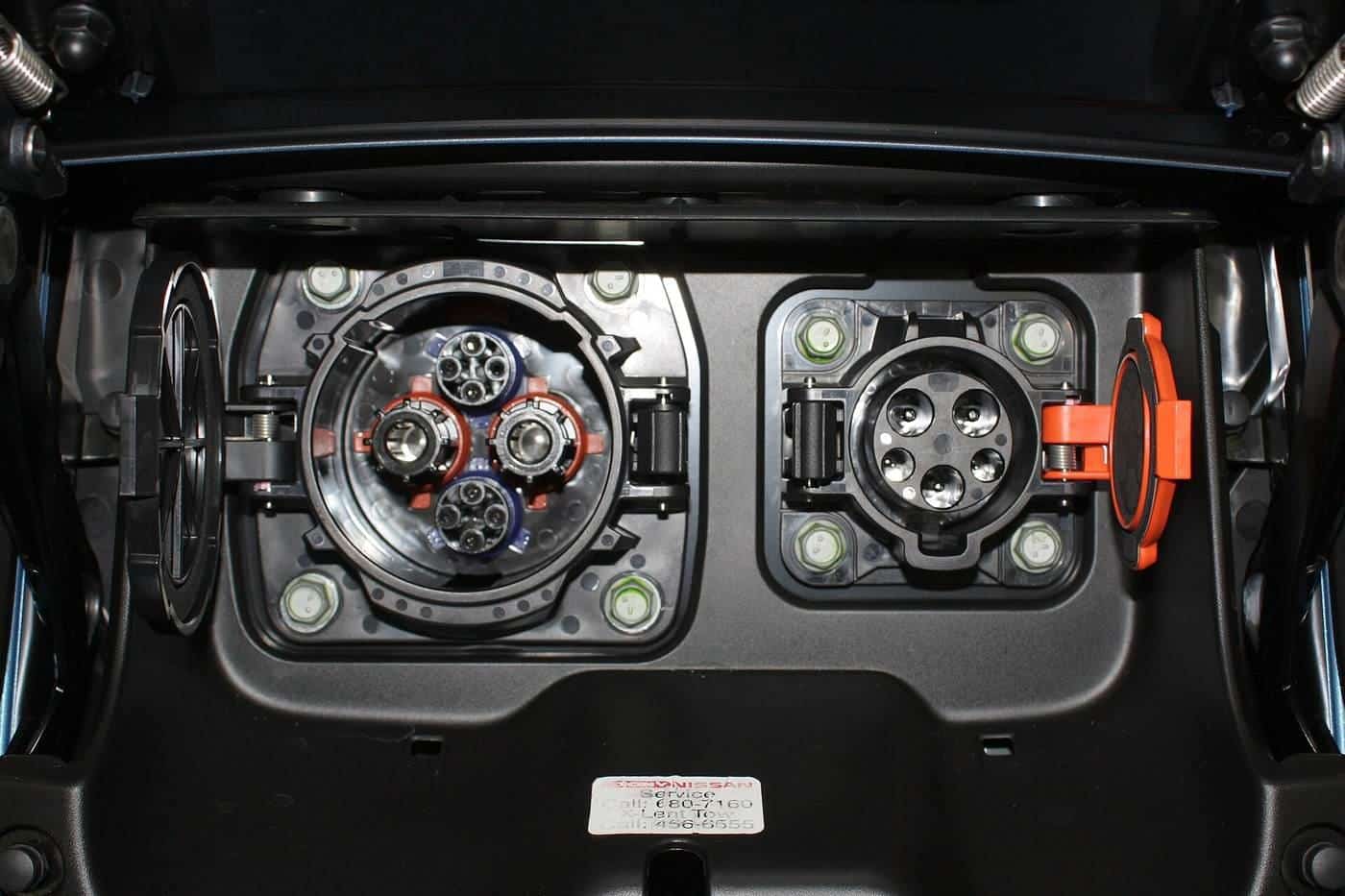
- Type 2 (AC): most public AC chargers in Australia use Type 2 plugs. AC chargers usually don't have a permanent cable attached, so you'll need to bring your own Type 2 cable. Energy.gov.au recommends at least a 5 metre cable for flexibility at different locations.
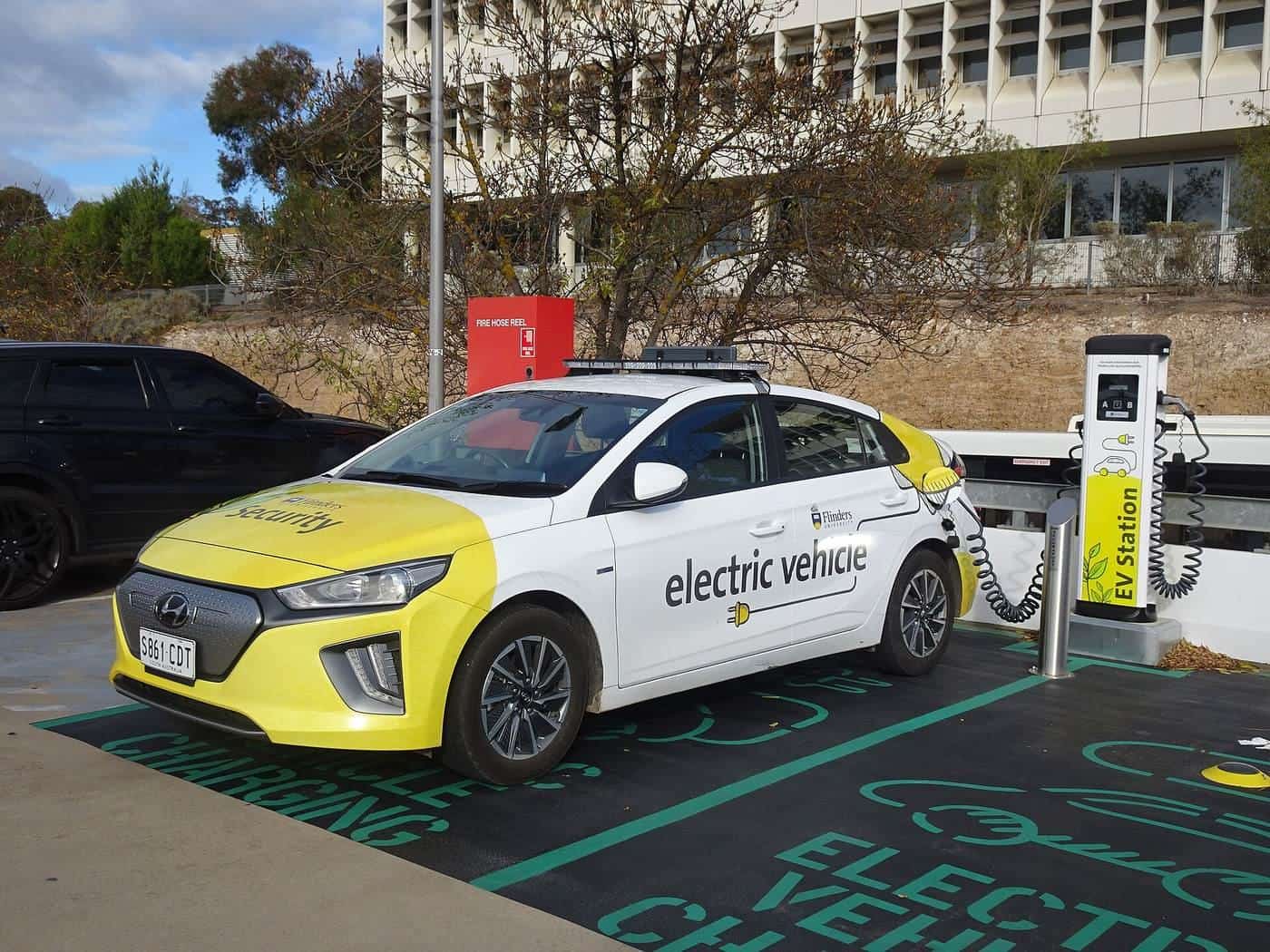
- CCS2 (DC): the standard plug for DC fast charging in Australia. DC fast chargers always have the charging cable attached, so you don't need to bring one.
Some older EVs use the CHAdeMO DC standard, which has far fewer chargers available. Check which connector your car uses. Public charging websites and apps show which plugs are available at each site before you arrive.
Finding chargers
Charging networks, motoring clubs and independent apps publish maps of public chargers, often with live availability, power output, plug types and pricing. The Green Vehicle Guide and energy.gov.au both point to the Electric Vehicle Council's charging information as a starting point. Many cars also show chargers in their built-in navigation, and some will precondition the battery for faster charging when you navigate to a fast charger.
Useful things to check before relying on a site:
- the number of chargers, so you have a backup if one is busy or out of service;
- the maximum power per plug and whether chargers share power;
- recent user check-ins or reported faults;
- opening hours or access restrictions, such as car parks that close at night;
- nearby facilities, like toilets and food, for longer stops.
Paying for public charging
Payment methods vary by network. Common options include a network app or account, an RFID card, or tap-and-go credit card payment at the charger. Some sites charge per kWh; some add session fees or idle fees for leaving your car plugged in after charging finishes. Some destination chargers are free for customers. Check prices in the app before you start.
The Green Vehicle Guide says it is generally more expensive to charge at a public charging station than at home, and energy.gov.au notes DC fast charging sites may be more expensive than AC sites. That's why most owners use public fast charging mainly for trips.
Charging etiquette
Public chargers are shared, so a few common courtesies help everyone:
- Only park in a charging bay while you're charging.
- Move your car promptly when you've finished; many apps notify you.
- On a busy fast charger, charge to what you need to reach your next stop rather than to 100%.
- Report faulty chargers to the operator.
- Return cables neatly so they aren't damaged or a trip hazard.
- Be patient and friendly if there's a queue.
Planning a road trip
Planning a long EV trip is less daunting once you've done it once. A simple approach:
- Know your real range. Use your own experience at highway speeds, not the advertised figure. Our guide to EV range and batteries explains what reduces it.
- Map fast chargers along the route, using a route-planning app or your car's navigation. Note backup sites.
- Plan stops with a buffer. Aim to arrive at each charger with some charge left, especially in regional areas where the next charger may be far away.
- Use the fast part of the curve. Charging slows as the battery fills, so shorter, more frequent stops are often quicker overall than charging to full each time.
- Charge overnight where you stay. Ask accommodation whether they have AC chargers or a suitable outlet you can use.
- Carry your cables: your portable cable and a Type 2 cable give you more options.
- Check opening hours and access at chargers you plan to use at night.
Remote and outback trips need extra care. Charger spacing can be wide, temperatures can be extreme and some sites have a single charger. Plan conservatively, and check current availability before you leave.
Charging without a driveway
If you can't charge at home, you can still own an EV by combining public and workplace charging. Look for AC chargers at places you regularly spend time, such as work, the gym or the shopping centre, and use fast chargers when needed. Costs will usually be higher than home charging, so factor that in. Our guide to charging in apartments and rentals looks at ways to get access to home charging.
What to do if a charger isn't working
Faults happen, particularly at busy or remote sites. If a charger won't start, first check you're using the right connector and that your app or payment method is active. Try a different plug or bay if there is one, and restart the session. Many networks run a support line listed on the charger; calling it can often reset the unit remotely. Report the fault in the network's app so other drivers know. If no charger is available, use your backup plan: the next fast charger within your remaining range, or an AC charger where you can wait longer. This is why arriving with a buffer matters, and why it helps to know which towns on your route have more than one charging site.
Key points
- Public AC chargers use Type 2 plugs; bring your own cable of at least 5 metres.
- DC fast chargers use CCS2 and have cables attached.
- Public charging generally costs more than home charging.
- Use apps to find chargers, check availability and plan backups.
- On busy fast chargers, charge to what you need and move on promptly.
Frequently asked questions
What plug do EVs use in Australia?
Energy.gov.au says most public AC chargers use Type 2 plugs, and CCS2 is the standard plug for DC fast charging in Australia.
Do I need my own cable for public charging?
For AC charging, usually yes. Energy.gov.au says AC chargers usually don't have a permanent cable attached, so bring your own Type 2 cable of at least 5 metres. DC fast chargers always have the cable attached.
How fast is a DC fast charger?
It depends on the charger and your car. Energy.gov.au notes public chargers that can charge a vehicle to 80% in less than 30 minutes are becoming more widely available.
Is public charging more expensive?
Generally yes. The Green Vehicle Guide says it is generally more expensive to charge at a public charging station than at home, and energy.gov.au notes DC fast charging sites may cost more than AC sites.
How do I find public chargers?
Public charging websites and apps show charger locations, plug types and often live availability. Energy.gov.au and the Green Vehicle Guide point to the Electric Vehicle Council's charging information.
Sources and further reading
Facts on this page were checked against these primary and official sources. Conditions change — confirm before you travel or buy.
- Electric vehicle charging equipment — energy.gov.au
- Electric vehicle information — Green Vehicle Guide
- Electric vehicle guide (PDF) — Green Vehicle Guide
- How to charge your electric vehicle — energy.gov.au